

What Triggers Bipolar Disorder?
Bipolar disorder triggers can vary from person to person and may include significant stress, disrupted sleep, major life changes, substance use, changes in daily routines, and seasonal or circadian rhythm changes. These factors do not cause bipolar disorder by themselves, but they may contribute to manic, hypomanic, or depressive episodes in susceptible individuals. Recognizing personal triggers and changes in mood, sleep, energy, and behavior can support earlier intervention. At Success Health System, our team provides individualized psychiatric care to help patients identify potential triggers and develop strategies for maintaining greater mood stability. Contact us today for more information or request an appointment online. We are conveniently located at 3700 I-70 Drive SE, Suite 110/112, Columbia, MO 65201.
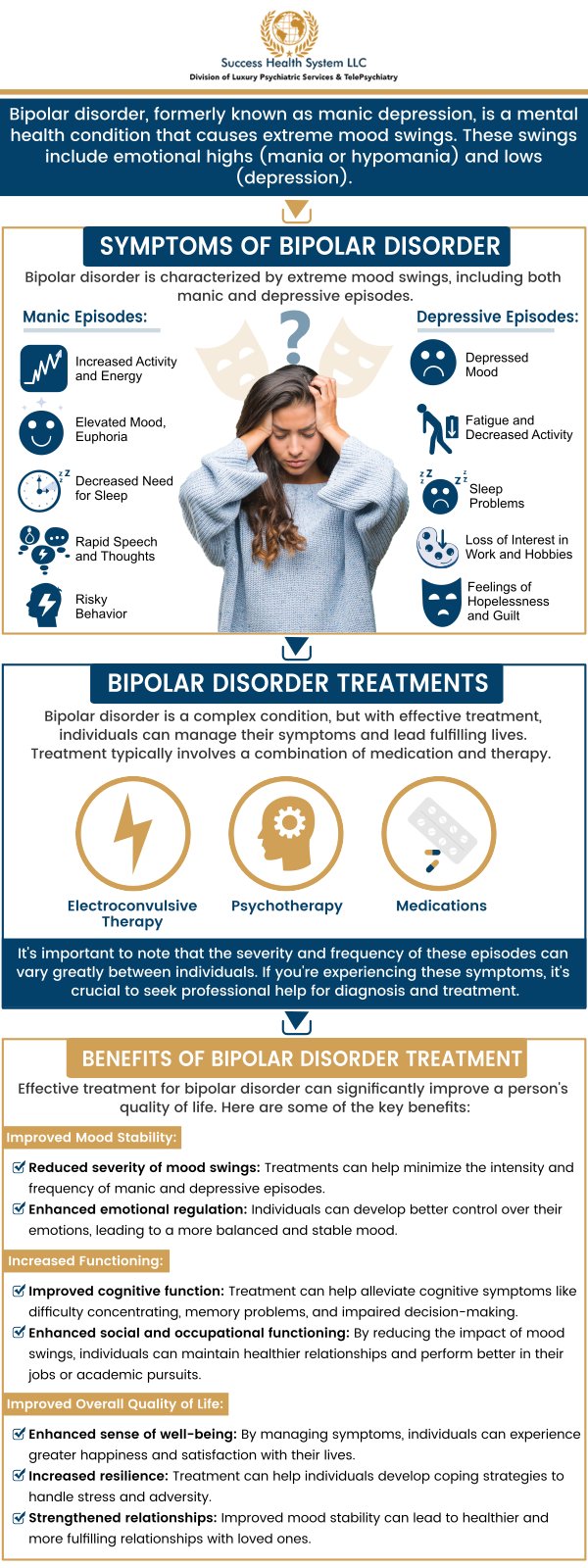
Table of Contents:
What are the most common triggers for bipolar disorder episodes?
Can major life changes trigger manic or depressive episodes?
How can bipolar disorder triggers be managed or reduced?
When should you see a psychiatrist for recurring bipolar disorder triggers?
Managing Bipolar Disorder Triggers With Board-Certified Psychiatrist Dr. Moses Tabe Ambilichu, M.D.
Bipolar disorder episodes may be influenced by emotional, environmental, and lifestyle factors. Triggers can differ considerably from person to person, and exposure to a potential trigger does not necessarily mean that a manic, hypomanic, or depressive episode will occur.
Some commonly reported triggers include:
• Sleep disruption: Insomnia, reduced sleep, or an irregular sleep schedule may affect mood stability.
• High stress levels: Work pressure, relationship difficulties, financial concerns, or grief may contribute to mood changes.
• Alcohol or substance use: These substances may interfere with sleep, judgment, mood, and treatment.
• Changes in routine: Major disruptions to regular sleeping, eating, working, or activity patterns may influence symptoms.
• Major life events: Both difficult and exciting events can create stress or changes in daily routines.
• Seasonal changes: Some individuals notice recurring mood patterns during particular seasons.
At Success Health System, our team helps patients recognize connections between potential triggers and changes in mood, sleep, energy, and behavior. Through individualized psychiatric evaluation and ongoing care, we help patients identify personal patterns and develop practical strategies to support greater mood stability.
Major life changes can contribute to manic or depressive episodes in some individuals with bipolar disorder, particularly when they cause substantial emotional stress, interfere with sleep, or disrupt established routines. Events such as moving, changing jobs, relationship changes, bereavement, financial difficulties, or major family transitions may affect emotional well-being and mood stability.
Positive events may also create significant emotional stimulation or changes in routine. Marriage, a new job, travel, or another exciting event may affect sleep and activity levels in susceptible individuals. However, a major life event does not automatically lead to a bipolar episode, and responses vary from one person to another.
At Success Health System, our mental health professionals consider recent life events alongside mood patterns, sleep habits, stress levels, and psychiatric history. Understanding how life changes affect an individual can help our team recommend personalized strategies for managing stress, maintaining routines, and recognizing early warning signs of mood changes.
Managing bipolar disorder triggers often begins with recognizing personal patterns and developing consistent habits that support mood stability. Strategies may include:
• Maintaining a regular sleep and wake schedule
• Following a consistent daily routine
• Using healthy stress-management techniques
• Avoiding or limiting alcohol and recreational substances
• Tracking changes in mood, sleep, energy, and activity
• Maintaining supportive social connections
• Following the established treatment plan
• Discussing medication or treatment changes with a healthcare professional
Psychotherapy may also help individuals develop coping skills, recognize early warning signs, and respond more effectively to stressful situations. Because triggers differ among individuals, management strategies should be personalized rather than based on a single approach.
At Success Health System, our team works with patients to identify individual bipolar disorder triggers and develop strategies appropriate for their symptoms, lifestyle, and treatment needs. Regular psychiatric follow-up also allows us to monitor mood patterns, address emerging concerns, and modify the care plan when clinically appropriate.
Consider seeing a psychiatrist when recurring triggers are accompanied by significant changes in mood, sleep, energy, thinking, behavior, or daily functioning. Warning signs may include needing considerably less sleep, unusually high energy, racing thoughts, severe irritability, impulsive decisions, persistent sadness, loss of interest, or difficulty managing everyday responsibilities.
Psychiatric evaluation may be particularly important when mood changes repeatedly interfere with work, school, relationships, finances, or self-care. A psychiatrist can evaluate whether symptoms may be related to bipolar disorder, another mental health condition, substance use, a medical concern, or a combination of factors. Immediate help is important if symptoms include suicidal thoughts, psychosis, dangerous behavior, or an inability to remain safe.
At Success Health System, our psychiatrists provide comprehensive evaluations for patients experiencing recurring mood changes or concerns about bipolar disorder triggers. Our team considers symptoms, potential triggers, medical and psychiatric history, and the impact on daily functioning to help clarify the diagnosis and develop an individualized approach to ongoing care.
Board-certified psychiatrist Dr. Moses Tabe Ambilichu, M.D., takes an individualized approach to identifying and managing factors that may contribute to bipolar disorder episodes. During a psychiatric evaluation, he considers changes in mood, sleep, energy, activity, stress levels, daily routines, substance use, and significant life events. Dr. Ambilichu also reviews each patient’s psychiatric and medical history to better understand personal patterns and recognize factors that may be associated with manic, hypomanic, or depressive symptoms.
Based on the evaluation, Dr. Moses Tabe Ambilichu, M.D., works with patients to develop practical strategies for supporting mood stability and reducing the impact of known triggers. This may involve maintaining consistent sleep and daily routines, developing healthier approaches to stress, monitoring early changes in mood, and following an individualized treatment plan. At Success Health System, Dr. Ambilichu provides ongoing psychiatric care to monitor progress, address changing symptoms, and adjust treatment when clinically appropriate. Contact us today for more information or request an appointment online. We are conveniently located at 3700 I-70 Drive SE, Suite 110/112, Columbia, MO 65201. We serve patients from Columbia MO, Shaw MO, Harg MO, Deer Park MO, Midway MO, Thornbrook MO and surrounding areas.

Check Out Our 5 Star Reviews


Additional Services You May Be Interested In
▸Addiction Treatment
▸ADHD Treatment
▸Anxiety Treatment
▸Bipolar Disorder
▸Depressive Disorders
▸Mental Disorder
▸Obsessive Compulsive Disorders
▸Psychotic Disorders
▸PTSD Treatment
▸Phobias and Fears Therapist
▸Psychiatrist
▸Substance Disorder
▸Social Anxiety Psychiatrist
▸Medication Management
▸Psychotherapy
▸Exomind TMS – Columbia
▸Spravato

Additional Services You May Be Interested In
▸Addiction Treatment
▸ADHD Treatment
▸Anxiety Treatment
▸Bipolar Disorder
▸Depressive Disorders
▸Mental Disorder
▸Obsessive Compulsive Disorders
▸Psychotic Disorders
▸PTSD Treatment
▸Phobias and Fears Therapist
▸Psychiatrist
▸Substance Disorder
▸Social Anxiety Psychiatrist
▸Medication Management
▸Psychotherapy
▸Exomind TMS – Columbia
▸Spravato




 Send Text
 How May I Help You?

