

When Should You Seek Help for Bipolar Disorder?
Experiencing natural emotional highs and lows is a normal part of life. However, when mood changes become intense, unpredictable, and disruptive to your daily functioning, they may point to an underlying mood condition. Recognizing the signs early and knowing when to reach out for psychiatric care can significantly improve long-term stability and quality of life. At Success Health System LLC, board-certified psychiatrist Dr. Moses Tabe Ambilichu, M.D., and our clinical team provide comprehensive evaluations, evidence-based medication management, and supportive psychiatric therapies to help individuals manage bipolar disorder. For more information, contact us today or schedule an appointment online. We are conveniently located at 12401 Olive Boulevard, Suite 206, Creve Coeur, ΜΟ 63141.
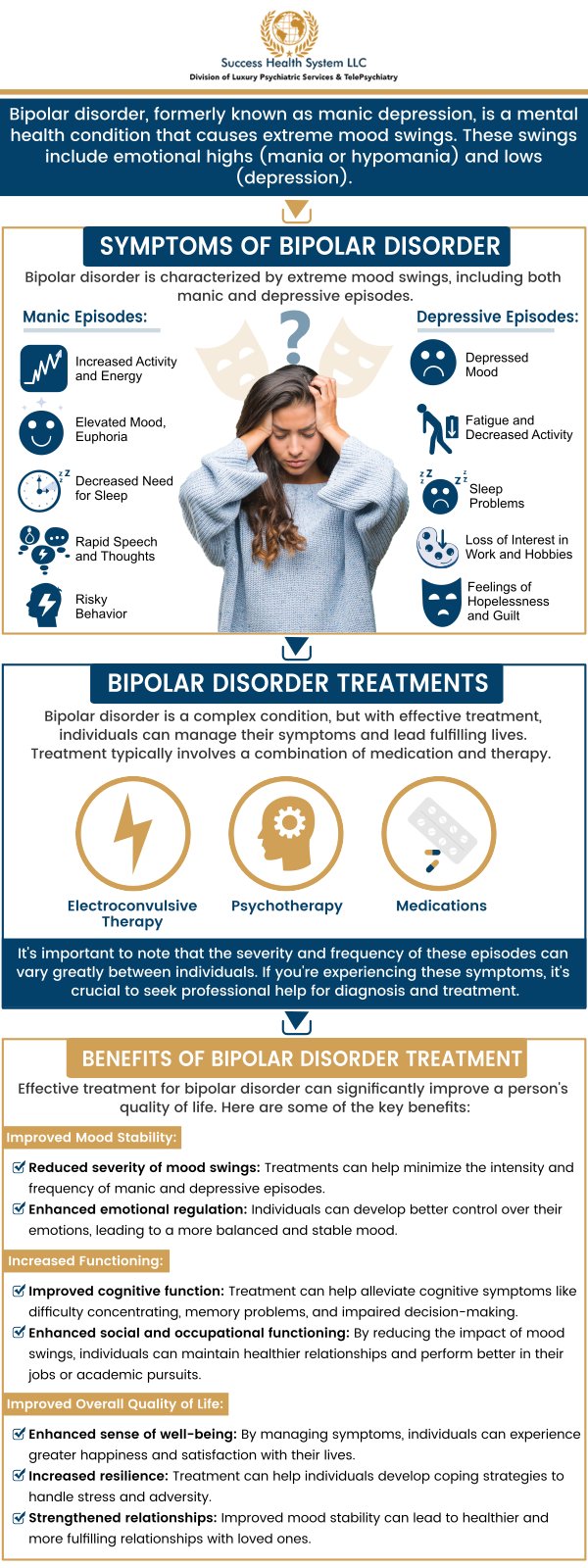
Table of Contents:
What symptoms indicate the need for bipolar disorder treatment?
When should mood swings become a concern for bipolar disorder?
How do you know if bipolar disorder symptoms are getting worse?
What are the risks of delaying treatment for bipolar disorder?
How Dr. Moses Tabe Ambilichu, M.D., Supports Patients Seeking Help for Bipolar Disorder at Success Health System LLC in Creve Coeur, MO
Bipolar disorder involves distinct shifts in mood, energy, activity levels, and concentration. Dr. Moses Tabe Ambilichu, M.D., and our team recommend seeking a professional evaluation if you experience persistent symptoms across either of its primary phases:
Signs of Mania or Hypomania
• Decreased Need for Sleep: Feeling energized, alert, and fully functional after only two or three hours of rest.
• Unusual Mood Elevation or Increased Irritability: A person may experience an atypical surge in energy or confidence, feel unusually important or powerful, or become easily frustrated and agitated in ways that differ from their usual behavior.
• Rapid Thoughts and Speech: Thoughts may move quickly from one idea to another, making it difficult to stay focused, while speech may become unusually fast, loud, or difficult for others to interrupt.
• Inflated Self-Esteem: An exaggerated sense of power, importance, or capability.
Signs of Depressive Episodes
• Persistent Sadness or Emotional Emptiness: Ongoing feelings of unhappiness, frequent crying, or a deep sense of despair that can interfere with daily activities and emotional well-being.
• Loss of Interest (Anhedonia): Losing all pleasure or interest in hobbies, work, social activities, and personal relationships.
• Severe Fatigue: Chronic lack of energy and sluggishness, even with adequate sleep.
• Cognitive Difficulties: Struggling to focus, make basic decisions, or remember routine tasks.
• Changes in Sleep and Appetite: Insomnia, oversleeping, unintended weight loss, or persistent overeating.
Everyone experiences mood fluctuations due to stress, hormonal changes, or life events. However, Dr. Moses Tabe Ambilichu, M.D., and our team advise that mood swings warrant clinical concern when they exhibit the following characteristics:
• Disproportionate Severity: The emotional shifts are far more extreme than typical mood swings, often alternating between manic euphoria/irritability and debilitating depressive crashes.
• Lack of a Clear Trigger: Mood shifts may develop without an identifiable cause or continue even after a stressful situation has ended, rather than following the usual emotional response to life events.
• Duration: Everyday mood changes tend to be short-lived, while bipolar mood episodes last longer and can disrupt daily life. Manic episodes generally continue for several days or more, whereas depressive episodes commonly persist for at least two weeks.
Bipolar disorder is an episodic illness that can change in pattern and intensity over time. Contact Dr. Moses Tabe Ambilichu, and our clinical team promptly if you notice worsening symptoms or significant changes in your condition that may require urgent medical evaluation.
• Rapid Cycling: Experiencing four or more distinct mood episodes (depression, mania, or hypomania) within a single 12-month period.
• Mixed Features: Experiencing symptoms of mania and depression simultaneously—such as high physical energy and racing thoughts paired with profound despair, agitation, and suicidal ideation.
• Emergence of Psychotic Symptoms: Hallucinations (hearing or seeing things that are not present) or delusions (strongly held false beliefs), which can occur during severe manic or depressive episodes.
• Increased Frequency of Crises: Finding that standard coping mechanisms no longer de-escalate emotional intensity, leading to frequent emergency room visits or missed obligations.
Postponing professional psychiatric care can compound the impact of the illness over time. Dr. Moses Tabe Ambilichu, and our team emphasize the following risks associated with delaying treatment:
• Neurobiological Progression: Research suggests that without appropriate care, mood episodes may become increasingly difficult to manage over time, potentially occurring more often, intensifying in severity, and responding less effectively to treatment.
• Strained Relationships and Career Impact: Repeated episodes of irritability, withdrawal, or impulsive behavior often lead to divorce, strained family dynamics, job loss, or academic setbacks.
• Financial and Legal Repercussions: Manic impulsivity can result in severe debt, depleted savings, or legal complications from reckless driving or erratic behavior.
• Co-Occurring Conditions: When bipolar disorder remains untreated, individuals may face a higher risk of developing substance use problems, experiencing significant anxiety, and encountering long-term physical health concerns associated with ongoing stress and mood instability.
• Elevated Suicide Risk: Severe depressive and mixed states carry a significantly elevated risk of self-harm when left unmanaged.
Receiving an accurate diagnosis is the essential foundation for long-term emotional stability. In Creve Coeur, MO, Dr. Moses Tabe Ambilichu, M.D., and our team at Success Health System LLC, provide structured, compassionate care tailored to each patient’s individual biological and psychological profile.
As a board-certified psychiatrist with extensive residency training in adult and geriatric psychiatry, Dr. Ambilichu brings deep clinical expertise in diagnosing complex mood disorders and identifying the underlying biological causes of psychiatric symptoms.
Creve Coeur Clinic Address:
12401 Olive Boulevard, Suite 206, Creve Coeur, ΜΟ 63141
If you or a family member are navigating severe mood swings or suspect symptoms of bipolar disorder, reaching out for early intervention can make all the difference. Contact Success Health System LLC today to schedule a confidential evaluation with Dr. Moses Tabe Ambilichu, M.D., and our team, and take the next step toward steady, long-term health. We serve patients from Creve Coeur MO, Overland MO, Bridgeton MO, Clayton MO, Kirkwood MO, Chesterfield MO, Clarkson Valley MO and surrounding areas.

Check Out Our 5 Star Reviews


Additional Services You May Be Interested In
▸Addiction Treatment
▸ADHD Treatment
▸Anxiety Treatment
▸Bipolar Disorder
▸Depressive Disorders
▸Mental Disorder
▸Obsessive Compulsive Disorders
▸Psychotic Disorders
▸PTSD Treatment
▸Phobias and Fears Therapist
▸Psychiatrist
▸Substance Disorder
▸Social Anxiety Psychiatrist
▸Medication Management
▸Psychotherapy
▸Exomind TMS – Columbia
▸Spravato

Additional Services You May Be Interested In
▸Addiction Treatment
▸ADHD Treatment
▸Anxiety Treatment
▸Bipolar Disorder
▸Depressive Disorders
▸Mental Disorder
▸Obsessive Compulsive Disorders
▸Psychotic Disorders
▸PTSD Treatment
▸Phobias and Fears Therapist
▸Psychiatrist
▸Substance Disorder
▸Social Anxiety Psychiatrist
▸Medication Management
▸Psychotherapy
▸Exomind TMS – Columbia
▸Spravato




 Send Text
 How May I Help You?

