

What are the Early Signs of Bipolar Disorder?
Early signs of bipolar disorder can involve noticeable changes in mood, energy, sleep, concentration, activity levels, or decision-making that differ from a person’s usual behavior. Some people may experience elevated or irritable moods, less need for sleep, rapid thoughts, or impulsivity, followed by periods of sadness, fatigue, or low interest. At Success Health System, Dr. Moses Tabe Ambilichu, M.D., and our team provide comprehensive psychiatric evaluations to understand patterns of symptoms and determine whether bipolar disorder or another mental health condition may be contributing to these changes. For more information, contact us today or schedule an appointment online. We are conveniently located at 12401 Olive Boulevard, Suite 206, Creve Coeur, ΜΟ 63141.
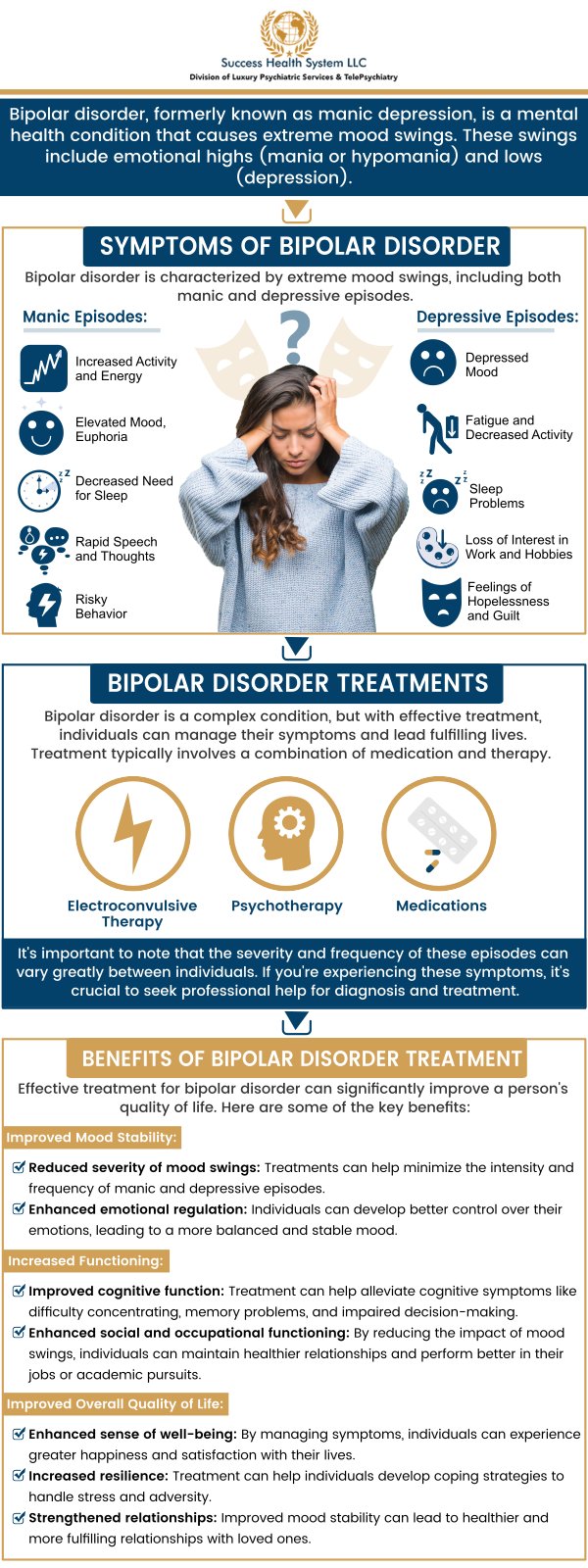
Table of Contents:
What are the most common early warning signs of bipolar disorder?
Can frequent mood changes be an early sign of bipolar disorder?
At what age do symptoms of bipolar disorder commonly begin?
When should someone seek a psychiatric evaluation for possible bipolar disorder?
How can Success Health System in Creve Coeur, MO help evaluate symptoms that may be related to bipolar disorder?
Early warning signs of bipolar disorder can sometimes be subtle and may resemble ordinary mood changes, stress, or periods of increased energy. However, bipolar disorder typically involves noticeable shifts in mood, activity levels, sleep, thinking, and behavior that are more intense or persistent than usual.
Common early warning signs may include:
• Unusually elevated or irritable mood: Feeling excessively energetic, overly confident, unusually cheerful, or more easily irritated.
• Decreased need for sleep: Sleeping much less than usual while still feeling energetic or active.
• Racing thoughts: Experiencing thoughts that move quickly from one idea to another.
• Rapid or increased speech: Talking faster or more frequently than usual.
• Increased activity: Starting multiple projects, taking on more responsibilities, or becoming unusually goal-focused.
• Impulsive behavior: Making risky decisions involving spending, relationships, driving, or other activities.
• Difficulty concentrating: Becoming easily distracted or having trouble staying focused.
• Depressive symptoms: Persistent sadness, low energy, hopelessness, or loss of interest in previously enjoyable activities.
• Social withdrawal: Pulling away from friends, family, work, or regular activities.
• Changes in daily functioning: Noticeable difficulties with work, school, relationships, or everyday responsibilities.
At Success Health System, our team helps patients recognize changes in mood and behavior through comprehensive mental health evaluations. We assess symptom patterns, medical and mental health history, sleep changes, daily functioning, and other contributing factors to determine whether bipolar disorder or another condition may be involved. Our team can then provide an individualized treatment plan that may include medication management, therapy, and ongoing support to promote greater mood stability and overall well-being.
Frequent mood changes can sometimes occur with bipolar disorder, but mood swings alone do not necessarily mean that a person has the condition. Bipolar disorder involves distinct changes in mood, energy, activity, concentration, and behavior, including periods of mania or hypomania and periods of depression.
Bipolar-related mood episodes are generally more noticeable and sustained than ordinary emotional ups and downs. Warning signs may include unusually elevated or irritable mood, increased energy, reduced need for sleep, racing thoughts, impulsive behavior, or periods of persistent sadness, low energy, and loss of interest. Changes that begin interfering with relationships, work, school, or daily responsibilities may warrant a professional evaluation.
At Success Health System, our team evaluates the pattern, duration, severity, and impact of mood changes along with sleep, energy levels, behavior, and mental health history. A comprehensive assessment can help determine whether symptoms may be related to bipolar disorder or another concern and guide an individualized treatment plan based on the patient’s needs.
Bipolar disorder most often begins during late adolescence or early adulthood, although symptoms can develop at other ages as well. Symptoms commonly start during the late teen years or early adulthood, and some people may experience symptoms during childhood.
Common age-related patterns include:
• Childhood: Bipolar symptoms can occur in children, although this is less common.
• Later adulthood: Symptoms can also begin later in life, so age alone cannot confirm or rule out bipolar disorder.
• Teen years: Early mood, energy, sleep, or behavioral changes may begin during adolescence.
• Ages 15–25: Bipolar disorder often first appears within this general age range.
• Early adulthood: Many people first experience recognizable manic, hypomanic, or depressive episodes during young adulthood.
Possible symptoms to watch for include unusually elevated or irritable moods, major changes in energy, decreased need for sleep, racing thoughts, impulsive behavior, prolonged sadness, or loss of interest in usual activities. These symptoms should be evaluated based on their severity, duration, pattern, and effect on everyday functioning.
At Success Health System, our team provides comprehensive mental health evaluations for individuals experiencing significant changes in mood, sleep, energy, or behavior. We assess each patient’s symptoms and history to help determine whether bipolar disorder or another mental health condition may be contributing and develop an individualized treatment plan when appropriate.
A psychiatric evaluation may be appropriate when changes in mood, energy, sleep, or behavior become persistent, unusually intense, or begin interfering with everyday life. Seeking an assessment can help clarify whether symptoms may be related to bipolar disorder or another mental health concern.
Consider seeking a psychiatric evaluation if you notice:
• Unusually elevated or irritable moods that are noticeably different from your usual behavior.
• Increased energy or activity that seems difficult to control.
• A decreased need for sleep while still feeling unusually energetic.
• Racing thoughts or rapid speech that make it difficult to slow down.
• Impulsive or risky behaviors, such as excessive spending or reckless decisions.
• Periods of persistent depression, sadness, hopelessness, or loss of interest.
• Difficulty concentrating or completing normal daily responsibilities.
• Major changes in work, school, or relationships related to mood or behavior.
• A family history of bipolar disorder combined with concerning mood changes.
• Symptoms that do not improve with previous treatment for depression or other mental health concerns.
• Thoughts of self-harm or suicide, which require immediate professional attention.
At Success Health System, our team provides comprehensive psychiatric evaluations to better understand changes in mood, energy, sleep, and behavior. We assess each patient’s symptoms, history, daily functioning, and contributing factors to determine an appropriate diagnosis and develop a personalized treatment plan that may include therapy, medication management, and ongoing support.
At Success Health System in Creve Coeur, MO, our team provides comprehensive psychiatric evaluations for individuals experiencing significant changes in mood, energy, sleep, behavior, or daily functioning. Dr. Moses Tabe Ambilichu, M.D., reviews symptom patterns, personal and family mental health history, sleep changes, periods of depression or elevated mood, and how these concerns affect work, relationships, and everyday responsibilities.
Because bipolar disorder can share symptoms with depression, anxiety, ADHD, and other conditions, our team focuses on careful assessment before recommending treatment. At Success Health System, Dr. Ambilichu and our team can develop a personalized care plan that may include medication management, psychotherapy, lifestyle guidance, and ongoing follow-up to help patients achieve greater mood stability and improved daily functioning.
For more information, contact us today or schedule an appointment online. We are conveniently located at 12401 Olive Boulevard, Suite 206, Creve Coeur, ΜΟ 63141. We serve patients from Creve Coeur MO, Overland MO, Bridgeton MO, Clayton MO, Kirkwood MO, Chesterfield MO, Clarkson Valley MO and surrounding areas.

Check Out Our 5 Star Reviews


Additional Services You May Be Interested In
▸Addiction Treatment
▸ADHD Treatment
▸Anxiety Treatment
▸Bipolar Disorder
▸Depressive Disorders
▸Mental Disorder
▸Obsessive Compulsive Disorders
▸Psychotic Disorders
▸PTSD Treatment
▸Phobias and Fears Therapist
▸Psychiatrist
▸Substance Disorder
▸Social Anxiety Psychiatrist
▸Medication Management
▸Psychotherapy
▸Exomind TMS – Columbia
▸Spravato

Additional Services You May Be Interested In
▸Addiction Treatment
▸ADHD Treatment
▸Anxiety Treatment
▸Bipolar Disorder
▸Depressive Disorders
▸Mental Disorder
▸Obsessive Compulsive Disorders
▸Psychotic Disorders
▸PTSD Treatment
▸Phobias and Fears Therapist
▸Psychiatrist
▸Substance Disorder
▸Social Anxiety Psychiatrist
▸Medication Management
▸Psychotherapy
▸Exomind TMS – Columbia
▸Spravato




 Send Text
 How May I Help You?
